
Blog
How to Fix Table Legs According to Your Tabletop Material

When fixing table legs, start by identifying the material beneath the tabletop: solid wood, chipboard, MDF or a mineral-based material. The appropriate fixing depends on the material, its actual thickness and the leg’s mounting plate. Here is MDO Concept’s guidance on preparing a secure, suitable assembly for your project.
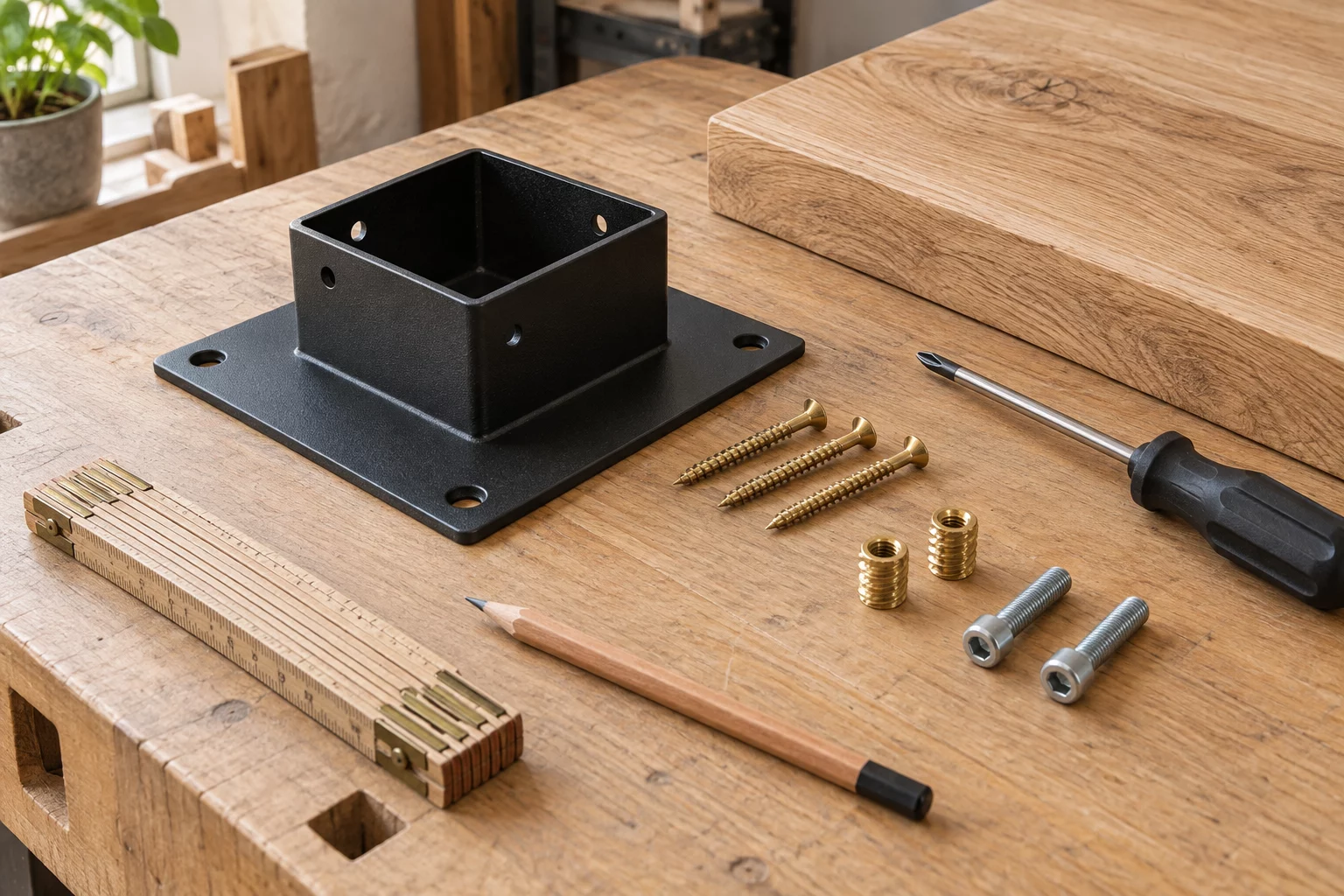
Which Fixings Are Suitable for Your Tabletop?
Solid Wood
Wood screws or inserts suitable for the wood species, with a length and positioning that respect the available thickness.
Chipboard and MDF
Fixings designed for the specific board material. Its density, condition and construction are just as important as its thickness.
Stone and Ceramic
A support and attachment method agreed with the tabletop supplier: a supporting frame, mounting plates or compatible adhesive bonding, depending on the project.
Four Checks Before Choosing Your Screws
- Identify the material. A wood-effect finish does not mean solid wood. A hollow-core tabletop cannot be treated in the same way as a solid board.
- Measure beneath each fixing point. Rebates, thinner edges and reinforcements can affect the usable thickness.
- Examine the mounting plate. Plate thickness, hole diameter and shape, screw head and any washers must all be compatible.
- Plan the complete assembly. Tabletop dimensions, weight, intended use and leg positioning determine the forces transmitted to the fixings.
Solid Wood: Wood Screws or Threaded Inserts?
Wood Screws for Direct Fixing
A suitable wood screw allows a mounting plate to be fixed directly into a sound solid wood tabletop. Choose its diameter, head type and penetration depth according to the recommendations of the leg and screw manufacturers. A countersunk screw head is not automatically a suitable substitute for a screw head with a flat bearing surface when the mounting plate has no countersunk holes.
Pre-drilling requirements depend on the screw, wood species and proximity to the edges. Follow the fixing manufacturer’s instructions and use a depth stop if a pilot hole is required. Tighten gradually: crushing the wood or allowing the screw to spin without gripping reduces the strength of the fixing.
Threaded Inserts for Removable Assemblies
A threaded insert suitable for wood accepts a metric screw and makes disassembly easier. It is not a universal solution: its length, external thread and positioning must suit the tabletop. Follow the pilot hole diameter and depth specified for the chosen insert; these are not automatically equal to the insert’s outside diameter.
Solid wood expands and contracts with changes in humidity. Respect the clearances and elongated holes provided in the table base to accommodate this movement. Do not restrict them through an improvised fixing arrangement.
Chipboard, Melamine-Faced Boards and MDF: Choose Fixings for the Actual Board Material
Melamine often describes the surface finish; the core may be chipboard or MDF. Use screws or inserts explicitly designed for that material, in an undamaged area of sufficient thickness. Inserts intended for solid wood are not necessarily suitable for these boards.
Avoid repeatedly inserting and removing screws from the same hole. If the board crumbles, the screw spins without tightening or the tabletop is hollow, do not simply compensate by using a larger screw. A load-spreading plate, a reinforced area or a different attachment method may be necessary and must be specified for the complete assembly.
What Screw Length Should You Choose?
The screw must be long enough to pass through the fixing components and penetrate sufficiently into the supporting material without reaching the visible surface of the tabletop. No single screw length or diameter is suitable for every table leg.
Understanding the Calculation
Length passing through the mounting plate and accessories + intended penetration into the wood.
The penetration depth must remain compatible with the usable thickness and the necessary clearance beneath the top surface. How screw length is measured also depends on the head type. This guideline helps you check a specified fixing, not calculate its load-bearing strength.
When using an insert, also check that the metric screw does not bottom out before the mounting plate is tightened. Check the lengths before assembly on a protected surface.

Stone, Marble and Ceramic: Plan the Support Before Adhesive Bonding
A mineral-based tabletop cannot be fixed using wood screws. Its weight alone does not determine the appropriate solution: thickness, fragility, any reinforcement and the distribution of support points are essential considerations. Ask the tabletop supplier for the specified support arrangement and attachment method: a supporting frame, supporting panel beneath the tabletop, manufacturer-installed inserts or bonded mounting plates, according to their recommendations.
Which Adhesive Should You Use Between Metal and Stone?
Technical adhesives, including certain two-part epoxy resins, may be suitable for bonding metal to stone. Their use must be approved for both materials, the metal finish and the stresses involved in the furniture assembly. Compatibility with stone alone does not establish suitability for bonding to a powder-coated surface.
Do not choose an adhesive simply because the packaging says ‘all materials’. Check its technical data sheet: approved substrates, surface preparation, bond-line thickness, temperature, working time and curing time before loading. Marble may also be susceptible to staining, so a compatibility test may be required.
How Should You Prepare an Approved Bonded Assembly?
- Position the components without adhesive and mark the support points according to the approved plan.
- Clean, degrease and prepare the surfaces only with the products and methods specified by the manufacturers. Do not damage the leg’s coating without approval.
- Follow the specified adhesive proportions, mixing and application instructions, together with the protective measures stated in the manufacturer’s instructions.
- Keep the assembly in the prescribed position and allow the required curing time before moving it or applying any load.
A bead of adhesive cannot compensate for inadequate support. Have any drilling or machining of a mineral-based tabletop carried out by its manufacturer or a suitably equipped professional.
What About Through-Bolts?
A bolt and nut may be suitable if the tabletop and furniture design allow a through-bolted assembly. The holes, distribution of forces and appearance of the top surface must be considered. This method is therefore not automatically preferable to concealed fixings.
Checks Before Use
- The legs rest correctly on the floor and the furniture has no unwanted movement or looseness.
- The fixings are suitable for the tabletop and mounting plate; no screw tip risks penetrating through the surface.
- Connections are tightened according to the recommendations without damaging the supporting material.
- The specified curing times for any products used have been respected.
- The tabletop and table base are compatible in terms of dimensions, weight and intended use. The fixing method alone does not guarantee stability.
Frequently Asked Questions
Are the Same Screws Suitable for Every Tabletop?
No. The material, usable thickness and mounting plate determine which fixings should be used. Also check whether fixings are supplied and which supporting material they are intended for.
Can Threaded Inserts Be Used in a Thin Tabletop?
Only if a specific insert is suitable for the material and available thickness. A thin tabletop does not automatically require an insert: it may need reinforcement or a different construction method.
Can You Bond a Table Leg Directly to Ceramic?
Only if the tabletop supplier and relevant manufacturers approve this assembly. Some projects require an intermediate support; direct adhesive bonding is not a general rule.
Plan Your Project with MDO Concept
To help determine the appropriate fixing method, gather the tabletop dimensions, thickness, material and weight, along with a photograph of its underside and the reference of the table base you are considering.
Tell us about your project · Table legs for wooden tabletops · Stone and ceramic · Choosing the right table legs
Where to Check Fixing Instructions
Consult the documentation for your specific product reference: RAMPA technical documents, SPAX furniture fixings and Cosentino tabletop documentation. These resources do not replace the instructions provided by your tabletop manufacturer.