MDO CONCEPT · ATTENTION TO DETAIL
Cross and X-shaped metal table legs
Cross and X-shaped metal table legs to add visual interest to your table. Compare the arrangement of the branches, dimensions and finishes, then check the seating space and tabletop fixings. A pair of X-shaped legs is different from a central table base with intersecting supports.
Guidance to help you choose ↓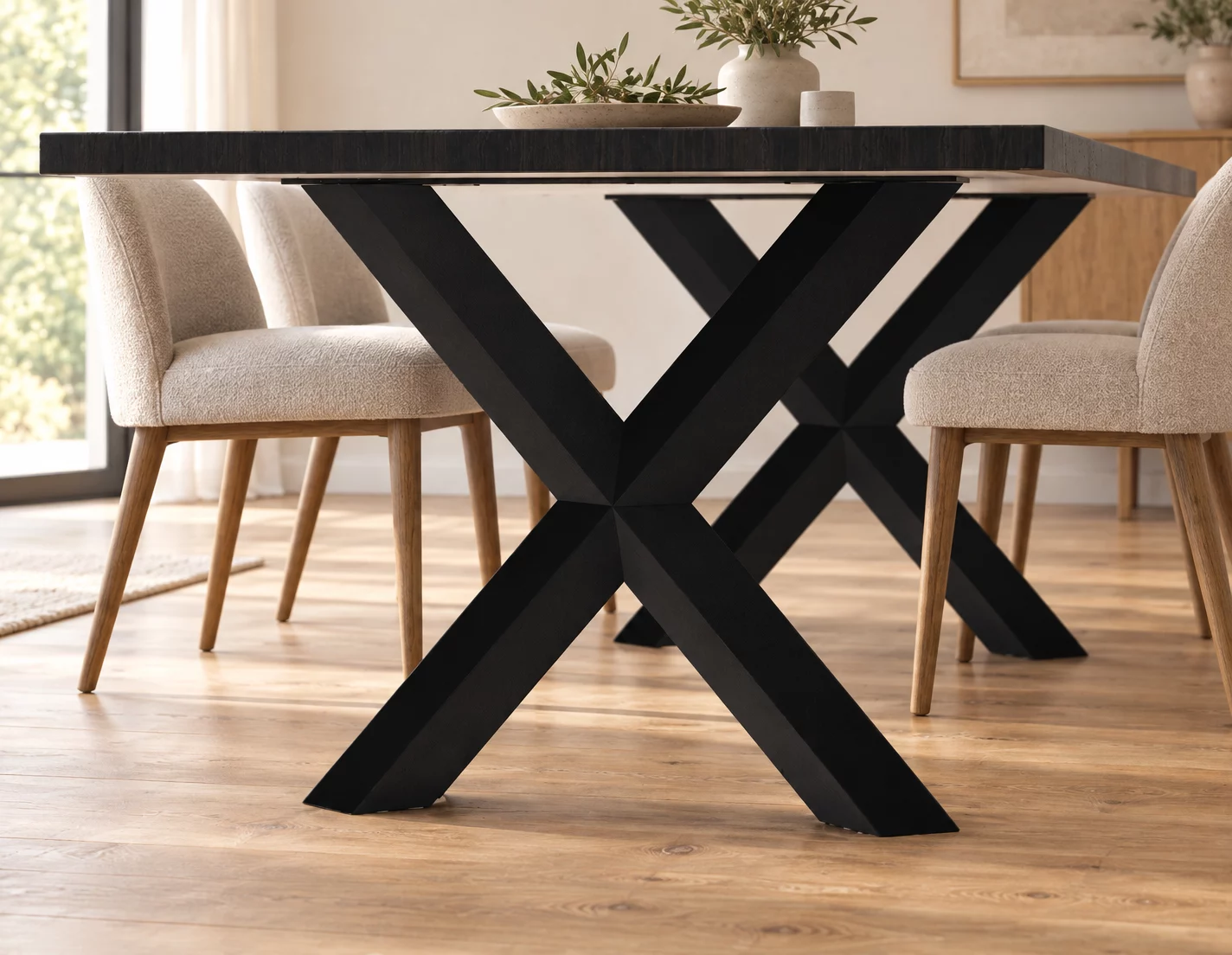
Models in this collection
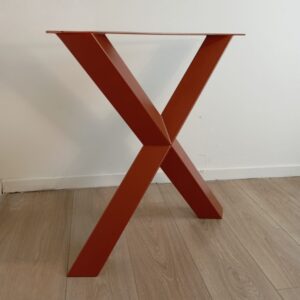
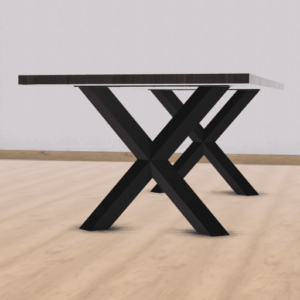
X-Shaped Metal Table Leg with Diamond Point – 71 cm High
CHOOSING THE RIGHT DESIGN · Cross / X
X-shaped table legs: examine the intersection from your chair
THE INTERSECTION DEFINES THE CHARACTER
Cross-shaped legs that define your table's design
The diamond-point model emphasises the diagonals through its angular faces. When choosing your X-shaped table leg, consider both its three-dimensional design and the space it leaves for diners.
Two legs, one arrangement to plan
A pair of X-shaped legs is positioned beneath the tabletop; it is not the same as a central table base with intersecting supports. Compare the width of the supports, mounting plates and setback from the ends.
Compare with a central table base →Character without compromising seating space
Position the chairs before fixing the legs: the intersection of the X and its branches may obstruct knees or shoes, particularly at the ends of the table.
Plan seating around the table →For further guidance: choosing fixings to suit your tabletop or planning the dimensions of your project.
Two cross-shaped frames or one central base with intersecting supports?
A front-facing photograph may conceal how the table base is arranged. Examine its top view, the number of floor contact points and the fixing areas. A central structure with intersecting supports does not occupy the same space as two separate X-shaped frames.
The intersection may obstruct your knees
For seating at the end of the table, check the height of the intersection and its setback from the edge. Along the longer sides, identify any branches that extend towards people's shoes. An attractive design centred beneath the tabletop may require the chairs to be moved slightly.
An X shape alone does not establish suitability for a large tabletop
The tube section, joints and connection to the tabletop remain decisive factors. You cannot conclude that an X-shaped leg will support more weight than a rectangular one simply by looking at its silhouette. For a stone or mineral-based tabletop, the distribution of supports must also be suitable for the material.
Bringing the cross design into the living room
At coffee table height, the intersection and proportions may change. Pay particular attention to the footprint of the branches in areas where people walk and to the fixings beneath a compact tabletop. A lower version must be designed for its dimensions.
THE DETAIL THAT MAKES THE DIFFERENCE
Finishes
A bright cream, a soft green or a touch of copper: coordinate your table legs with the tabletop and seating. Whether smooth, finely textured or metallic, the appearance of the finish matters just as much as the colour.
View the 15 colours and finishesColours shown on screen are indicative.
Frequently asked questions
How should I orient a pair of cross-shaped table legs?
Refer to the model's assembly instructions: some mounting plates have a specified orientation or position. Position the table legs beneath the tabletop and mark out the chairs before fixing them. The visual alignment of the two crosses must remain compatible with the designated fixing areas.
Does a long table with cross-shaped legs need a connection between the legs?
The X-shaped design alone does not answer this question. The tabletop length, its rigidity and the spacing between supports determine whether a supporting frame or connecting member may be needed. Have the complete assembly assessed rather than adding an improvised crossbar after installation.
Is an X-shaped table leg always a central table base?
No. An X may be a frame positioned at each end or part of a central structure. Check the number of supports and the model's top view.
Does the cross obstruct knees at the end of the table?
That depends on the setback and position of the intersection. Compare the side view with the diner's seating position: the central area of the cross may occupy the space needed for their legs.
Are X-shaped table legs always stronger than rectangular ones?
The silhouette alone is not enough to rank their strength. Tube section, joints, dimensions, fixings and tabletop all determine how the complete assembly performs. Compare the actual specifications of the models.
Can the same X shape be used for a coffee table?
Yes, provided the model is designed for that height. The proportions and position of the intersection change with the dimensions; an appropriately designed version is needed, rather than arbitrarily shortening a dining table leg.
A model, a shape, an idea.