
MDO CONCEPT · ATTENTION TO DETAIL
Rectangular and square metal table legs
Rectangular and square metal table legs for creating a dining table or desk. Compare widths, tube sections and finishes, in standard or bespoke dimensions. Choose a frame suited to your tabletop and the space needed for seating.
Guidance to help you choose ↓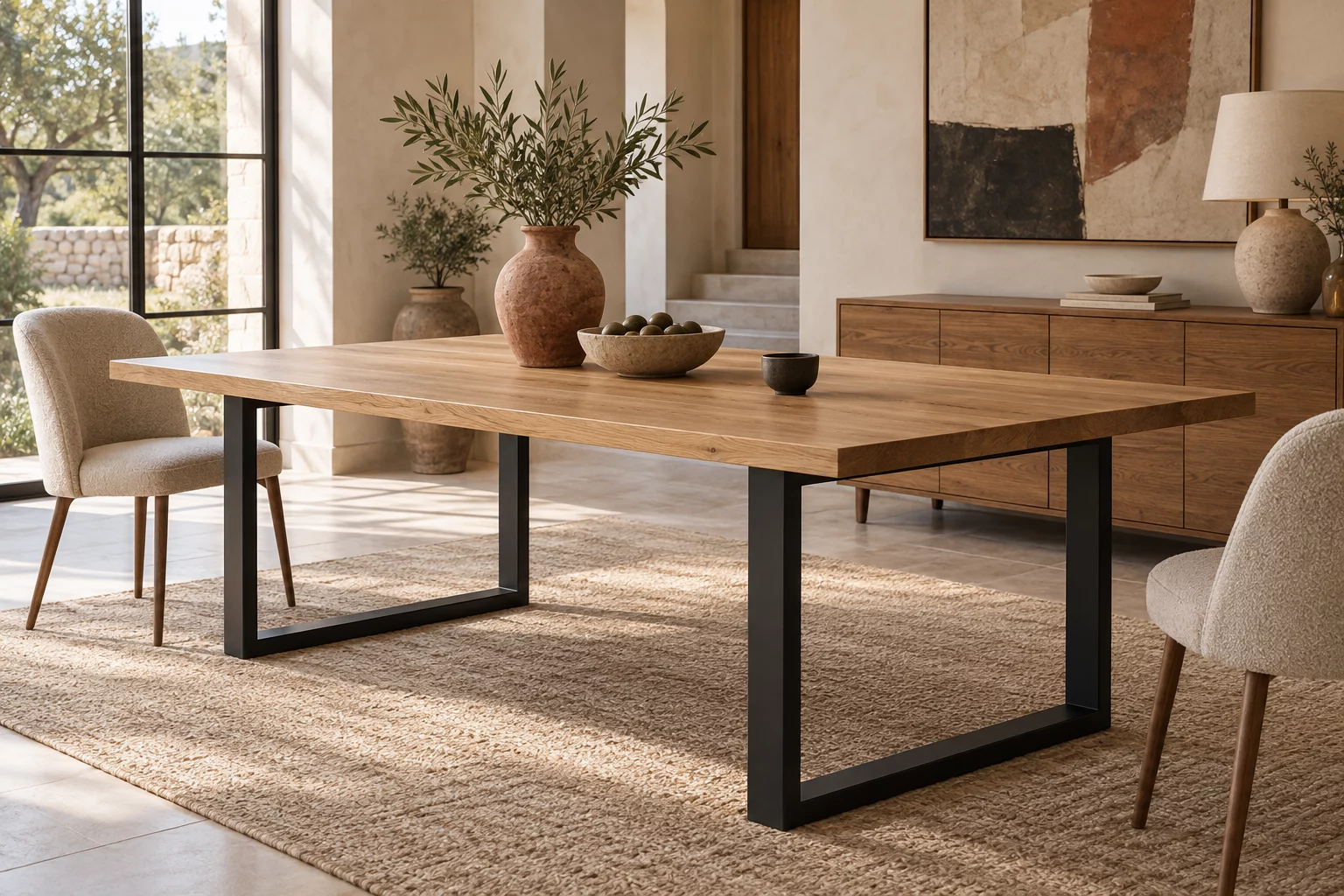
Models in this collection
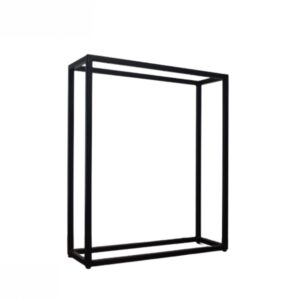
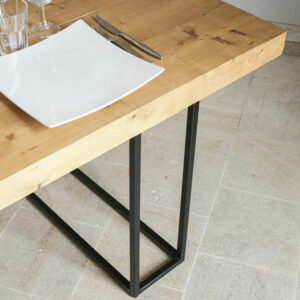
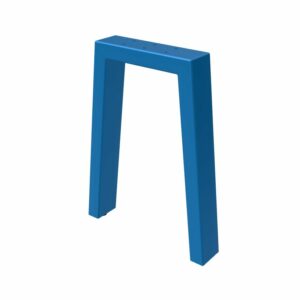
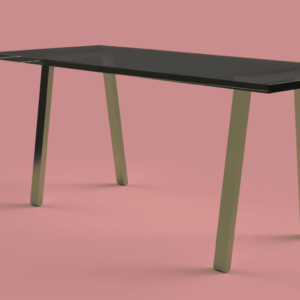
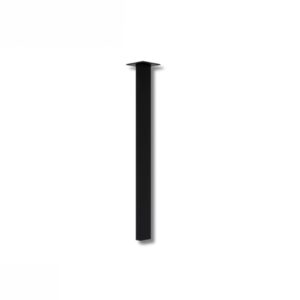
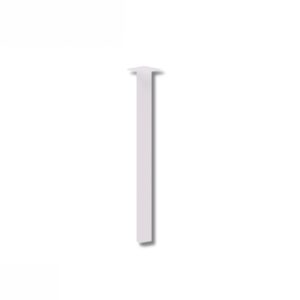
Rectangular Metal Table Leg – 71 cm High
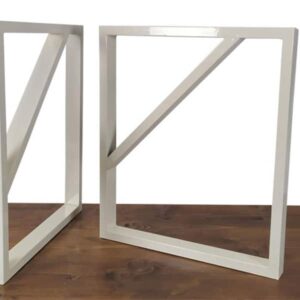
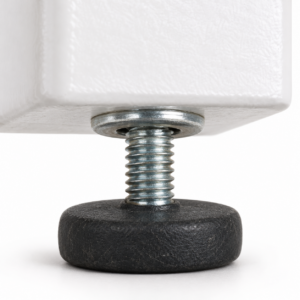
Rectangular Metal Table Leg with Diagonal Bar – 71 cm High
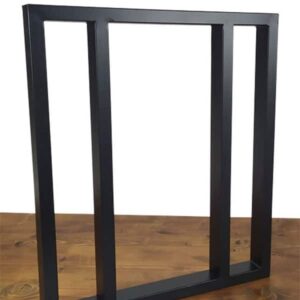
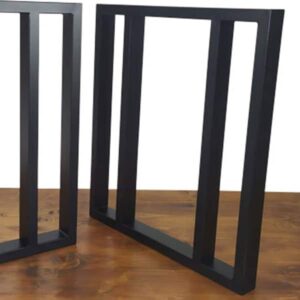
Rectangular Metal Table Leg with Two Bars – 71 cm High
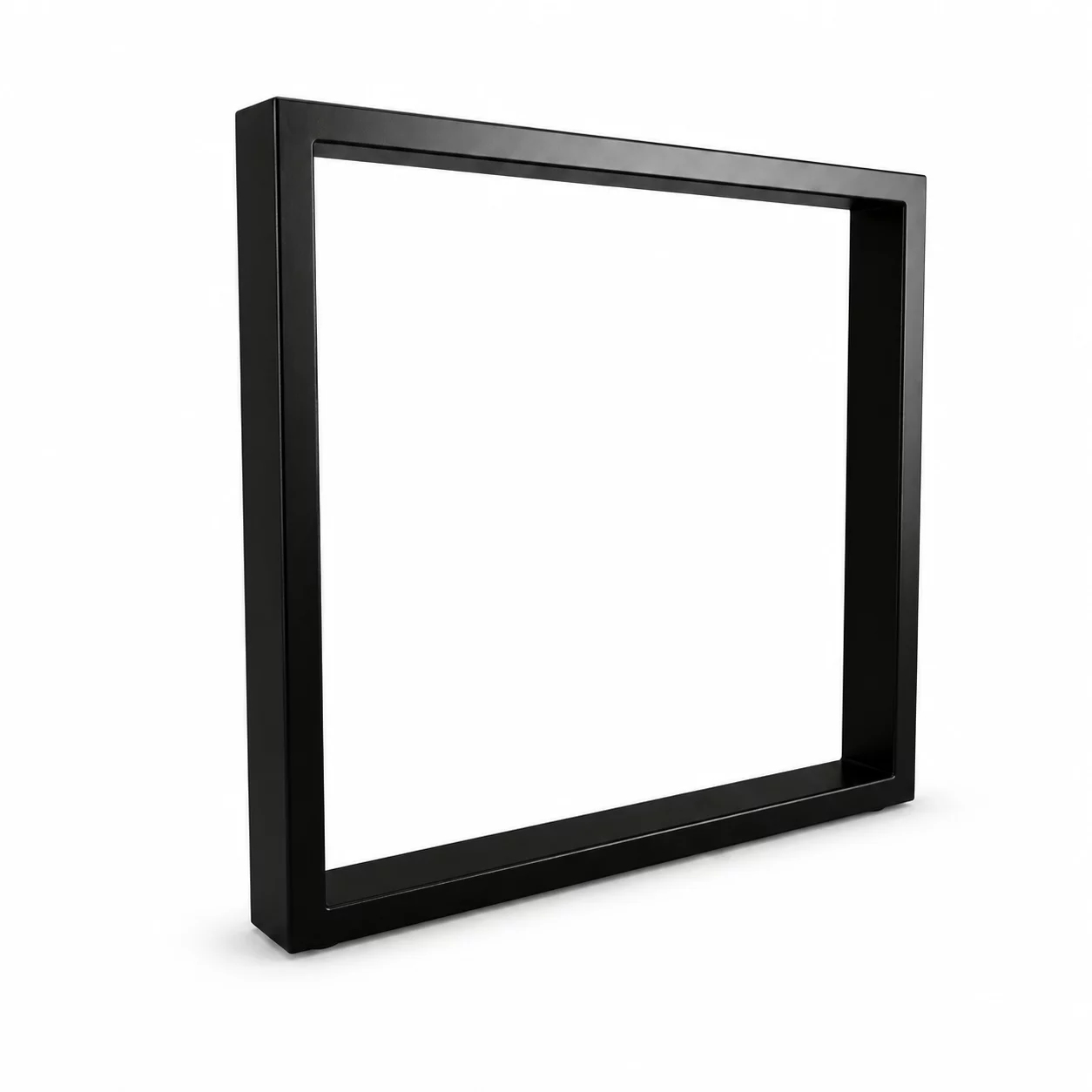
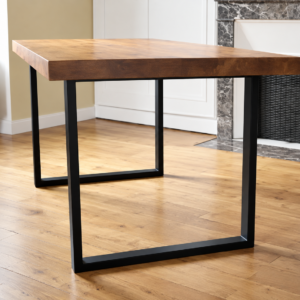
Square and Rectangular Metal Frame Table Leg – 71 cm High
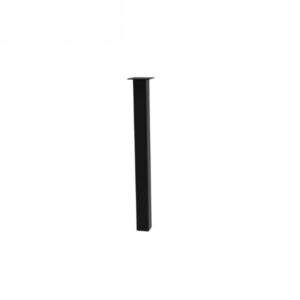
Square Metal Table Leg – 71 cm High
CHOOSING THE RIGHT DESIGN · Rectangular & square
A rectangular frame that provides plenty of room
GETTING THE PROPORTIONS RIGHT
A clean-lined frame, a table tailored to your needs
A square table leg has similar height and width dimensions. A rectangular frame allows its width to be adapted to the project. In both cases, compare the overall external dimensions with the actual clear space between the uprights.
Choosing the width
An 80 cm tabletop with a centred 60 cm frame leaves 10 cm on each side. This is an example of proportions, not confirmation that the supports are suitable: the material, span and fixings still need to be checked.
Compare the model's dimensions →Planning your tabletop
Mark out the mounting plates and chair positions before assembly. The lower crossbar must not obstruct the feet of someone seated at the end of the table.
Choose suitable fixings →Need a particular width or height? Plan a bespoke project.
Three measurements to distinguish on the same table leg
The external width indicates the overall space occupied, the internal width indicates the available clearance, and the mounting plate defines the fixing area. For a dining table, also measure the opening at knee and armrest height. A chair may fit between the uprights at floor level but come into contact with another component higher up.
The lower crossbar and seating at the end of the table
Mark out where the seated person's feet will be positioned. Depending on the frame's setback, the lower crossbar may occupy this area. Moving the frame further from the end also changes the span and overhang: comfort and support must be considered together.
A rectangular frame beneath an oval tabletop
The tabletop narrows near its ends. Mark out the exact outline of the mounting plate and fixings at the proposed position, rather than simply comparing the tabletop's maximum width with that of the frame. The guide to rectangular and oval tabletops explains this positioning.
Rectangular or trapezoidal: compare the opening, not just the style
A rectangular frame has parallel uprights. With trapezoidal table legs, the opening varies with height and the different widths at the top and bottom. Compare these spaces with the furniture you intend to position underneath: a bench, armchair or drawer unit.
THE DETAIL THAT MAKES THE DIFFERENCE
Finishes
A bright cream, a soft green or a touch of copper: coordinate your table legs with the tabletop and seating. Whether smooth, finely textured or metallic, the appearance of the finish matters just as much as the colour.
View the 15 colours and finishesColours shown on screen are indicative.
Frequently asked questions
What is the difference between a square and a rectangular table leg?
The proportions of the frame change. You need to compare its actual height and width: the name of the shape alone is not enough to determine how it should be positioned beneath your tabletop.
Can I reuse the fixing holes from an old table base?
Compare the centre-to-centre spacing of the fixing holes and the contact area of both mounting plates. Holes that are close together cannot necessarily be reused, particularly if the supporting material is damaged. The fixing method also depends on the material: advice for a wooden tabletop does not apply directly to stone.
What is the difference between the frame's external width and its clear opening?
The opening is smaller because the uprights occupy part of the width. To accommodate a chair or drawer unit, request the internal measurement at the relevant height, not just the advertised width.
Does the mounting plate extend beyond the rectangular frame?
That depends on the model. Mark out its actual outline beneath the tabletop, particularly near a rounded edge. A compatible frame width does not guarantee that all the fixing holes will fall within a usable area.
Does the lower crossbar obstruct someone seated at the end of the table?
It may occupy the area where the diner places their feet. Position a chair at the end of your table plan and also check the frame's setback and knee clearance.
Should the frame be as wide as the tabletop?
Not necessarily. Compare the proportions, seating space and the model's requirements for your tabletop. An aesthetically pleasing setback does not establish that the span or stability is suitable.
A model, a shape, an idea.