MDO CONCEPT · ATTENTION TO DETAIL
A design that sets the tone
The silhouette gives a table its character, but the openings and floor footprint also determine how it can be used. Compare each design with your tabletop and seating.
Guidance to help you choose ↓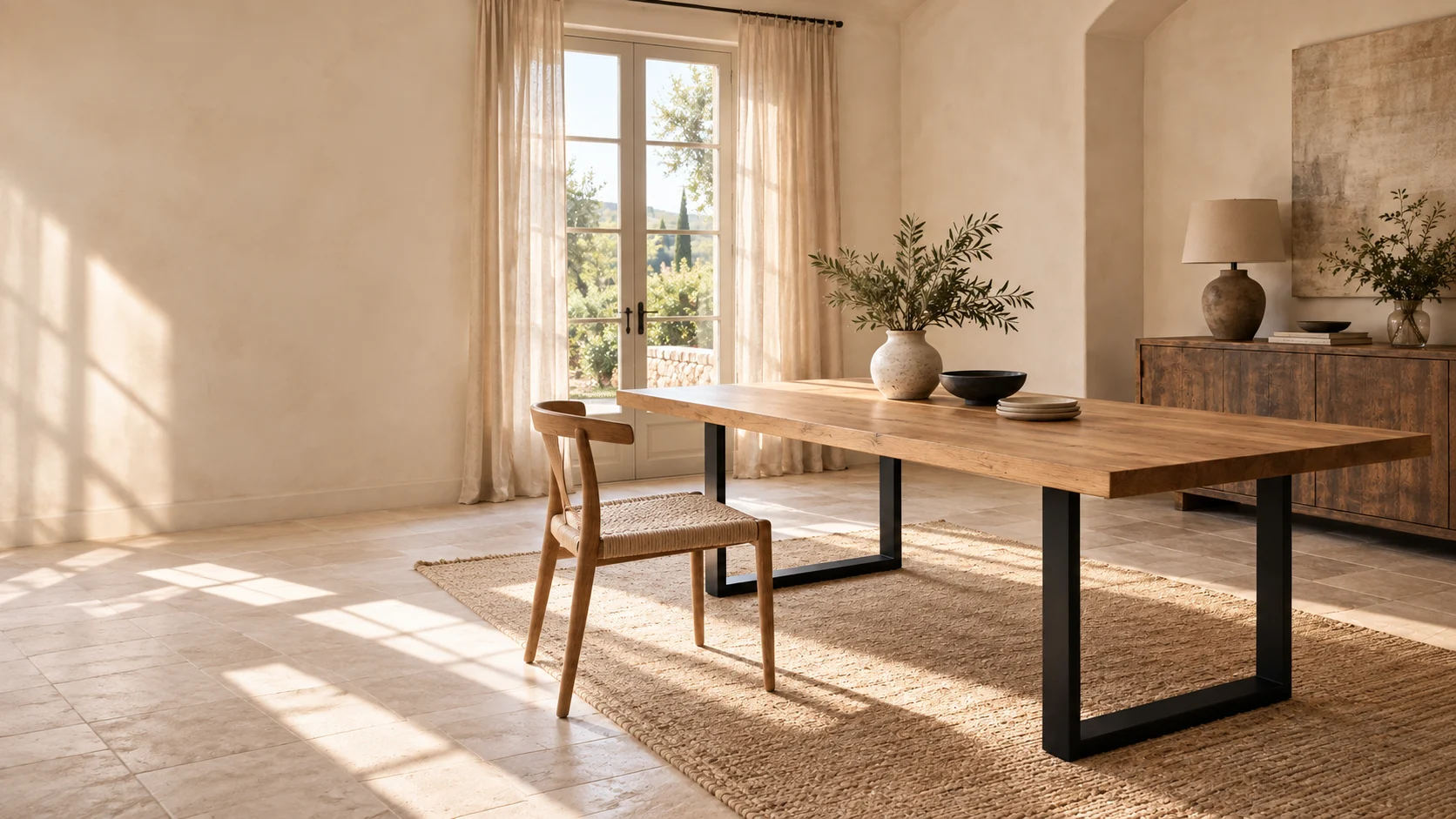
CHOOSING THE RIGHT DESIGN · By shape
Which table leg shape should you choose?
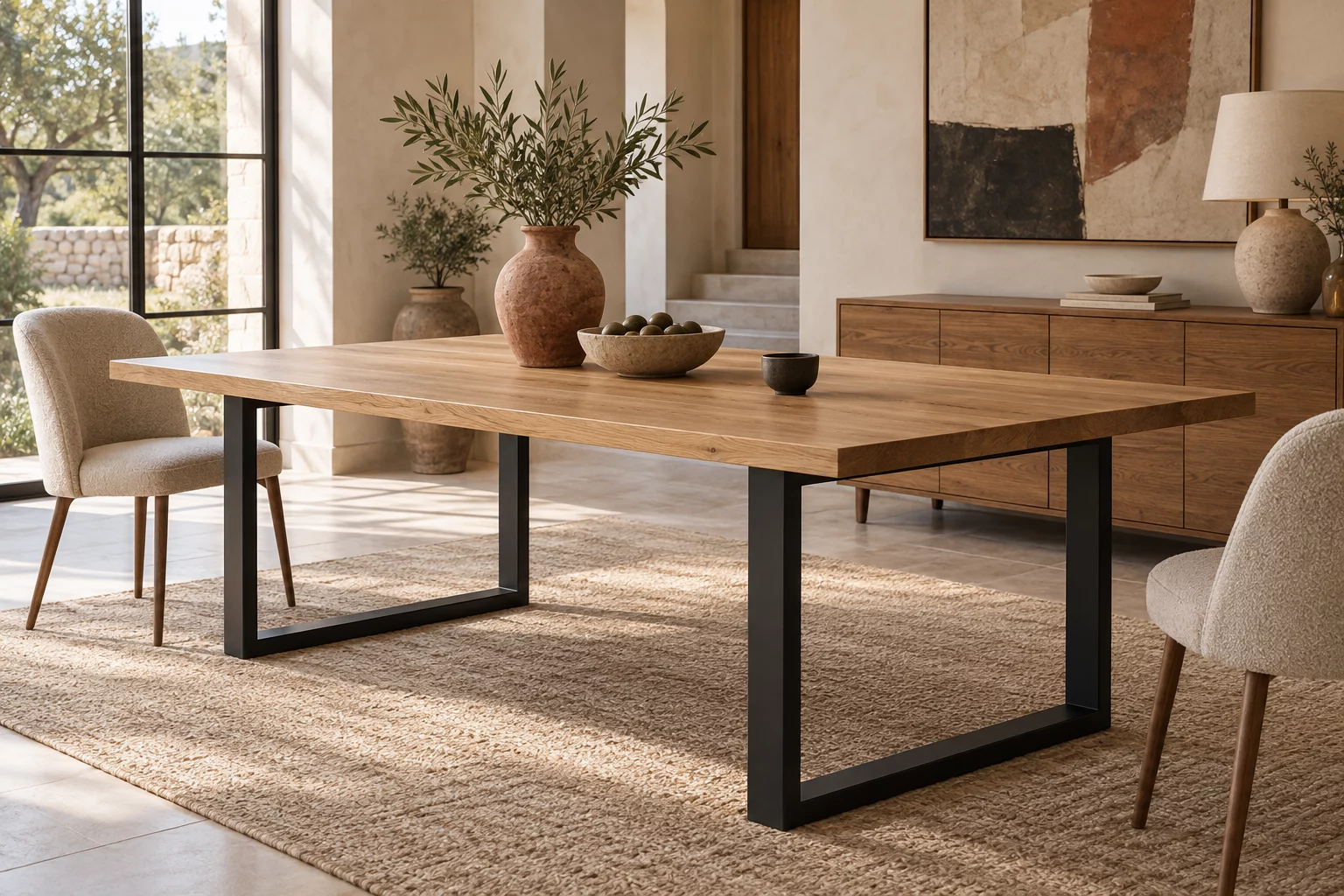
Rectangular and square: clean lines beneath the tabletop
These frames emphasise the lines of the furniture and have a clearly defined appearance when viewed from the front. To choose their dimensions, compare their external width with that of the tabletop, then examine the internal opening: this partly determines the available legroom.
The rectangular and square table legs refer to the shape of the leg frame, not the tabletop. Their positioning must also allow chairs to be tucked under the table.
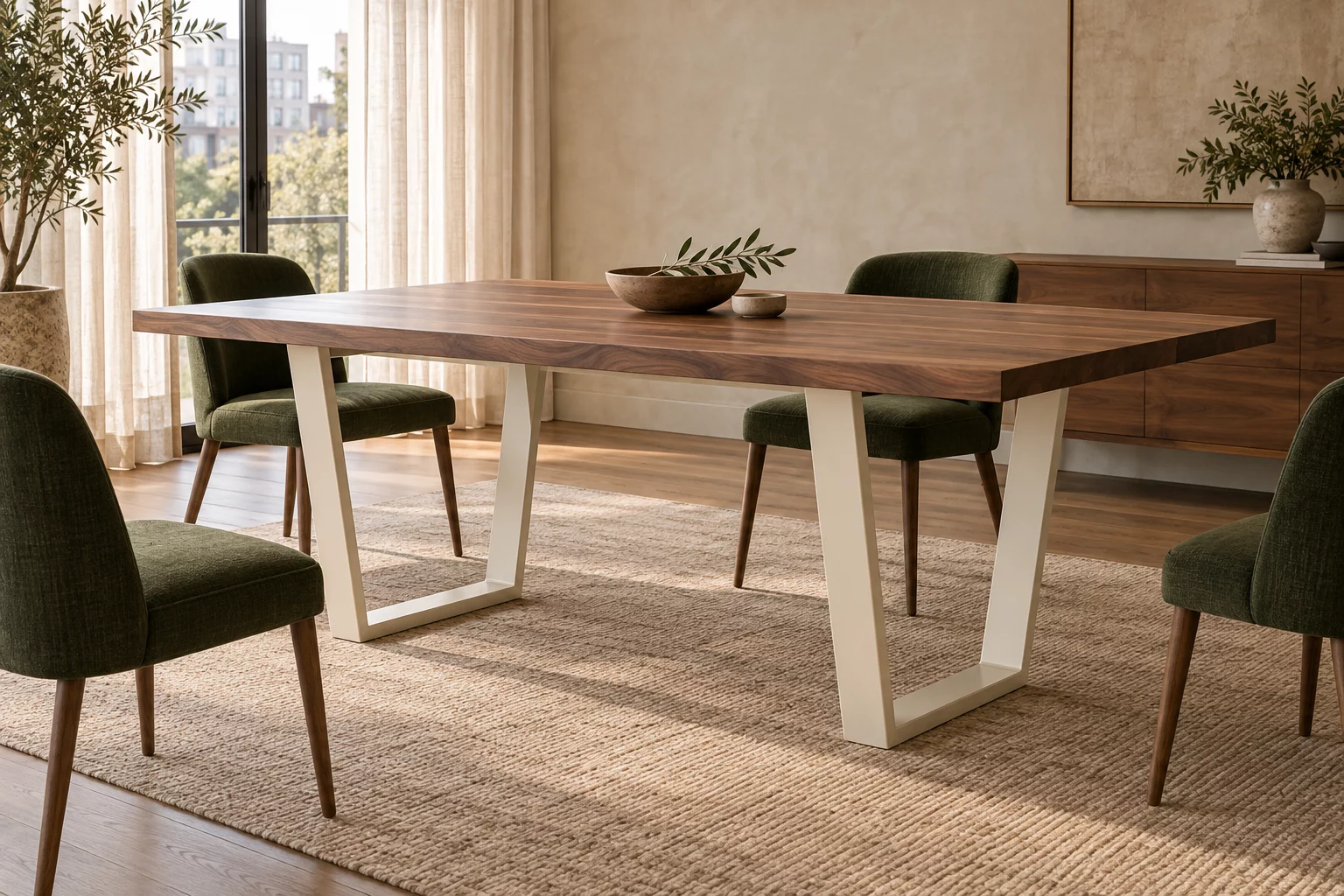
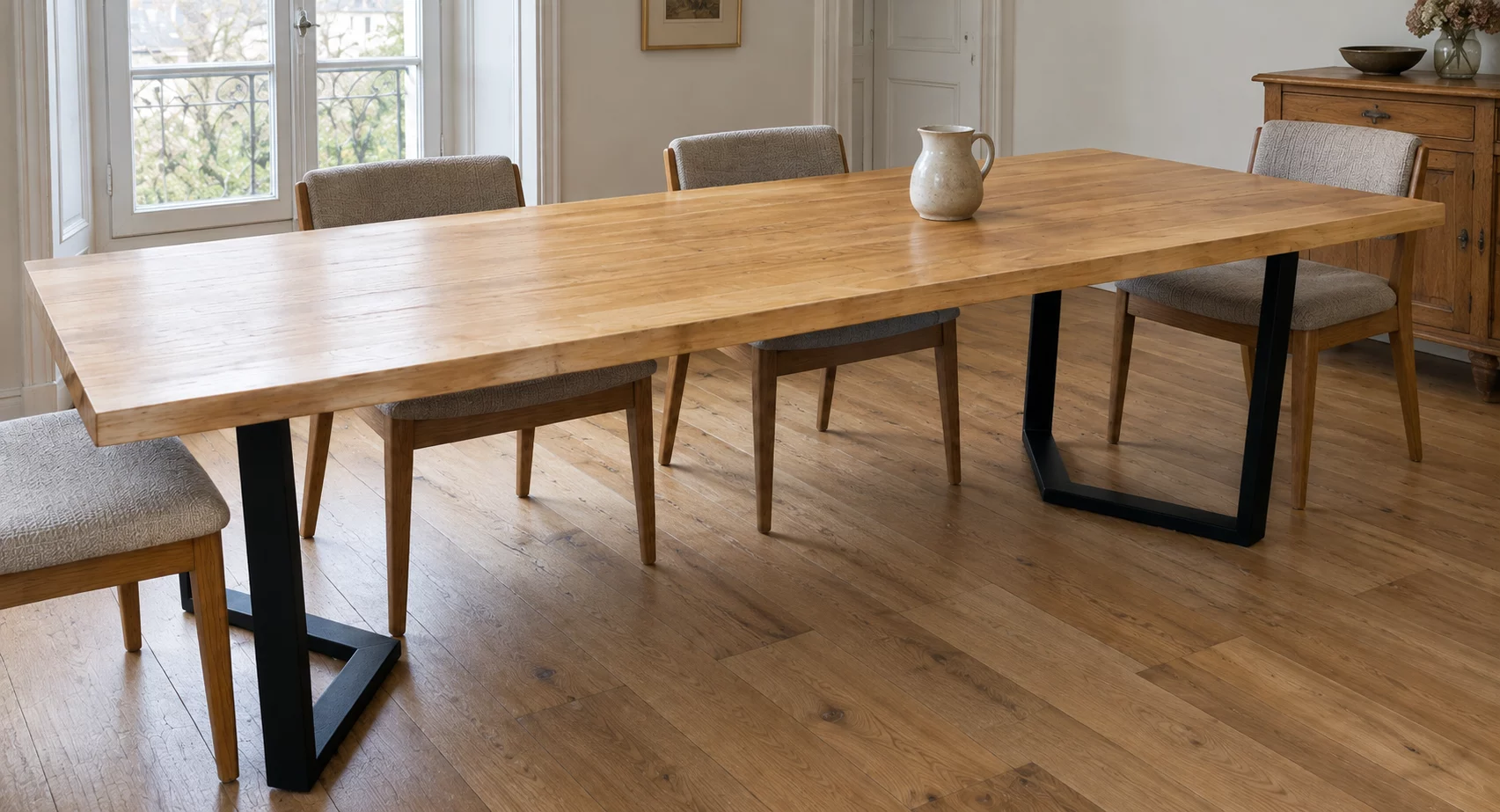
Trapezoidal: working with angled uprights
The angled uprights create a more open or narrower silhouette, depending on the model. The widths at the top and at floor level differ: check both, without overlooking knee clearance.
Compare the trapezoidal table legs with your tabletop overhang and the position of seating at the ends of the table.
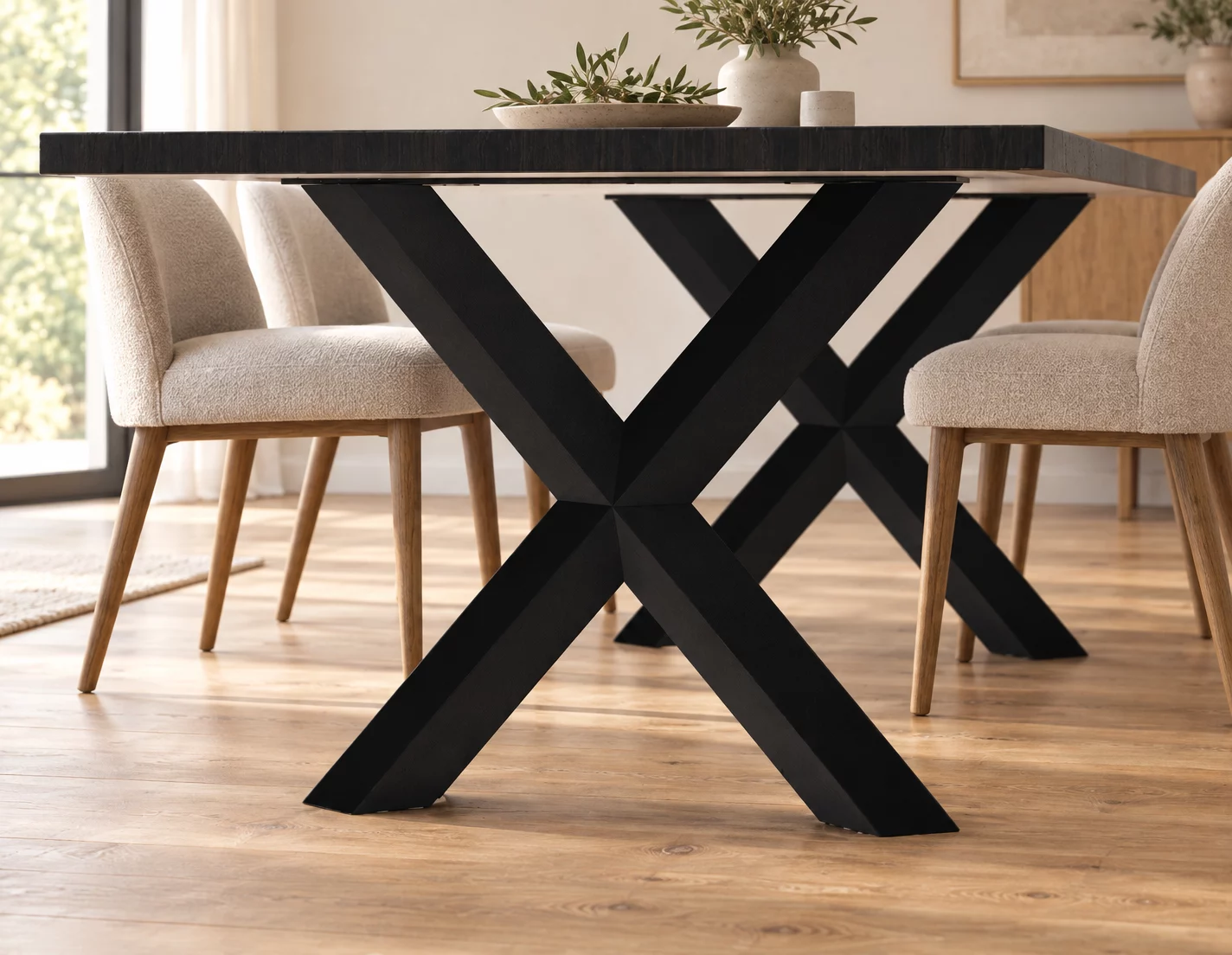
Cross and X: adding visual rhythm to the table
The intersecting sections create a distinctive geometric design that remains clearly visible beneath the tabletop. This intersection also takes up some space: allow enough room for legs and shoes, particularly for people seated at the ends.
Discover the cross and X-shaped table legs and check their dimensions on the relevant model's product page.
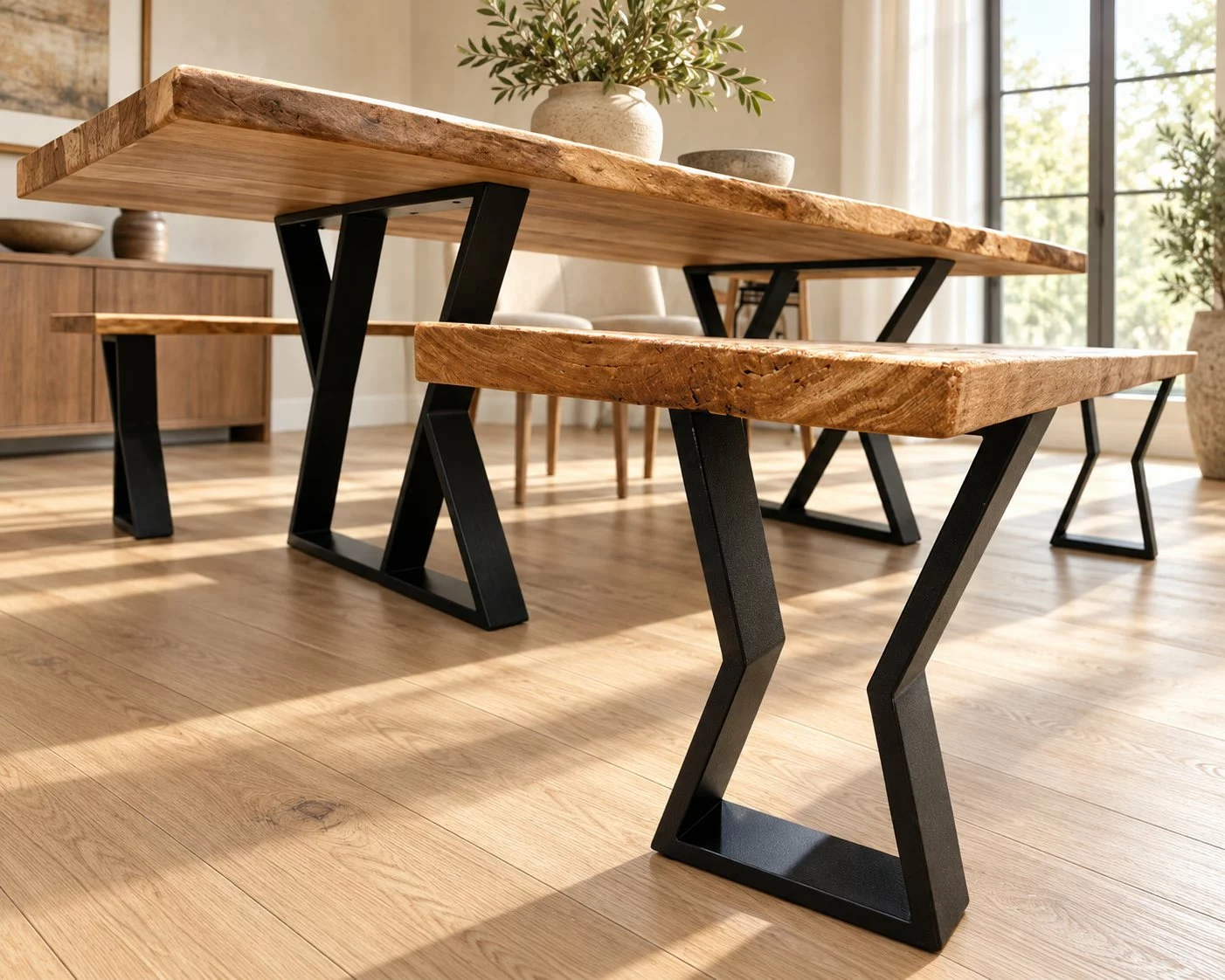
Hourglass: a silhouette that narrows at the centre
The hourglass shape combines a narrow waist with wider sections. Its appearance alone does not indicate how comfortable the table will be to use: compare the floor footprint, the width beneath the tabletop and the opening available for your legs.
The hourglass table legs add character to a simple tabletop, with positioning that should be adapted to the chairs and tabletop overhangs.
Central table base: arranging seating around the supports
A central table base groups the supports together instead of placing a leg near each corner. It can make certain arrangements easier, but its base or branches still occupy floor space.
With a central table base, examine the entire perimeter of a round tabletop and the span of an elongated tabletop. The model must be suitable for the tabletop's dimensions and material.
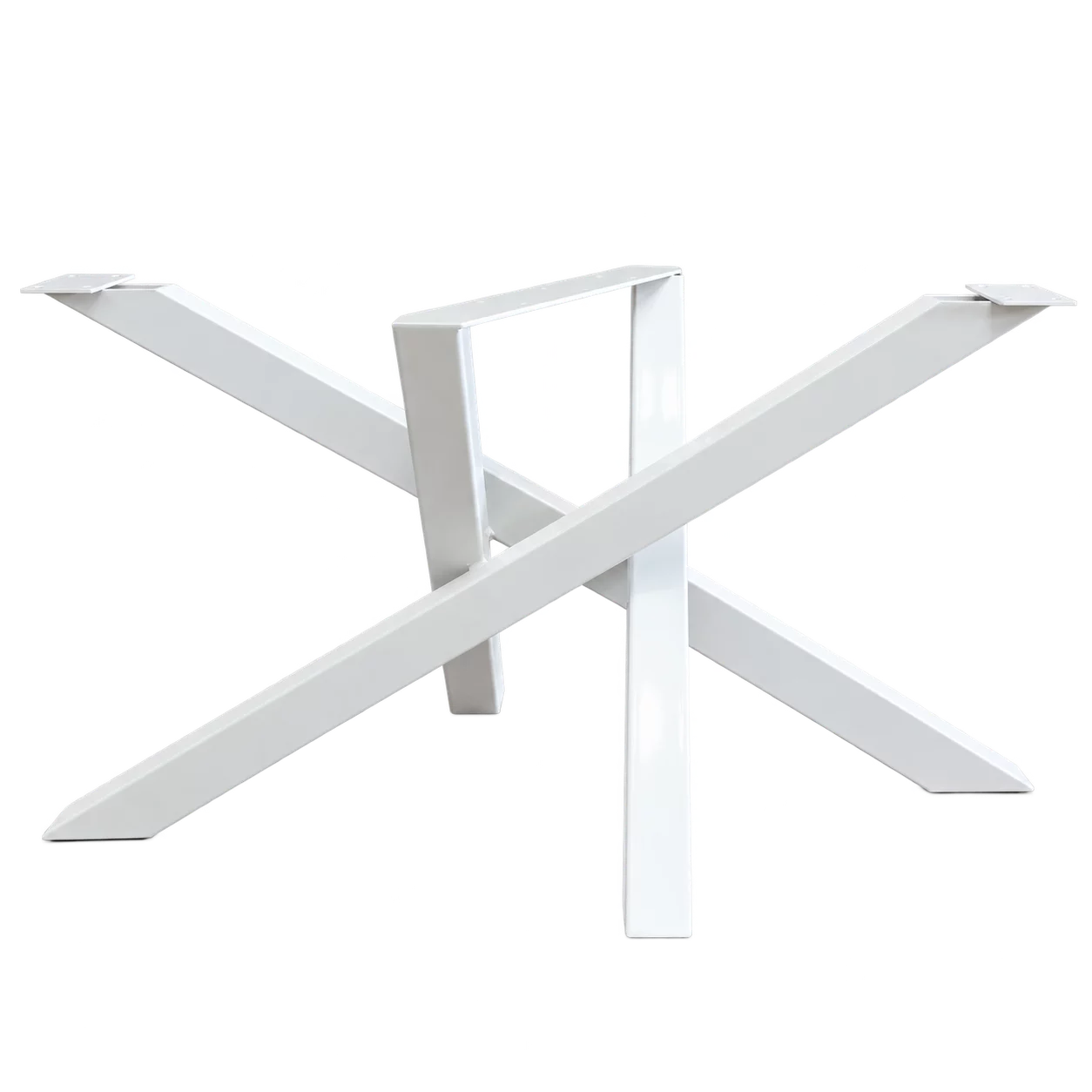
M design: an architectural feature to accommodate in your space
The branches of the M design create several openings beneath the tabletop. Identify the floor contact points and areas where people need to move before fixing the legs in place; the number of supports alone does not guarantee the stability of the furniture.
Explore the M-design table legs to compare their positioning with your chairs and the width of your tabletop.
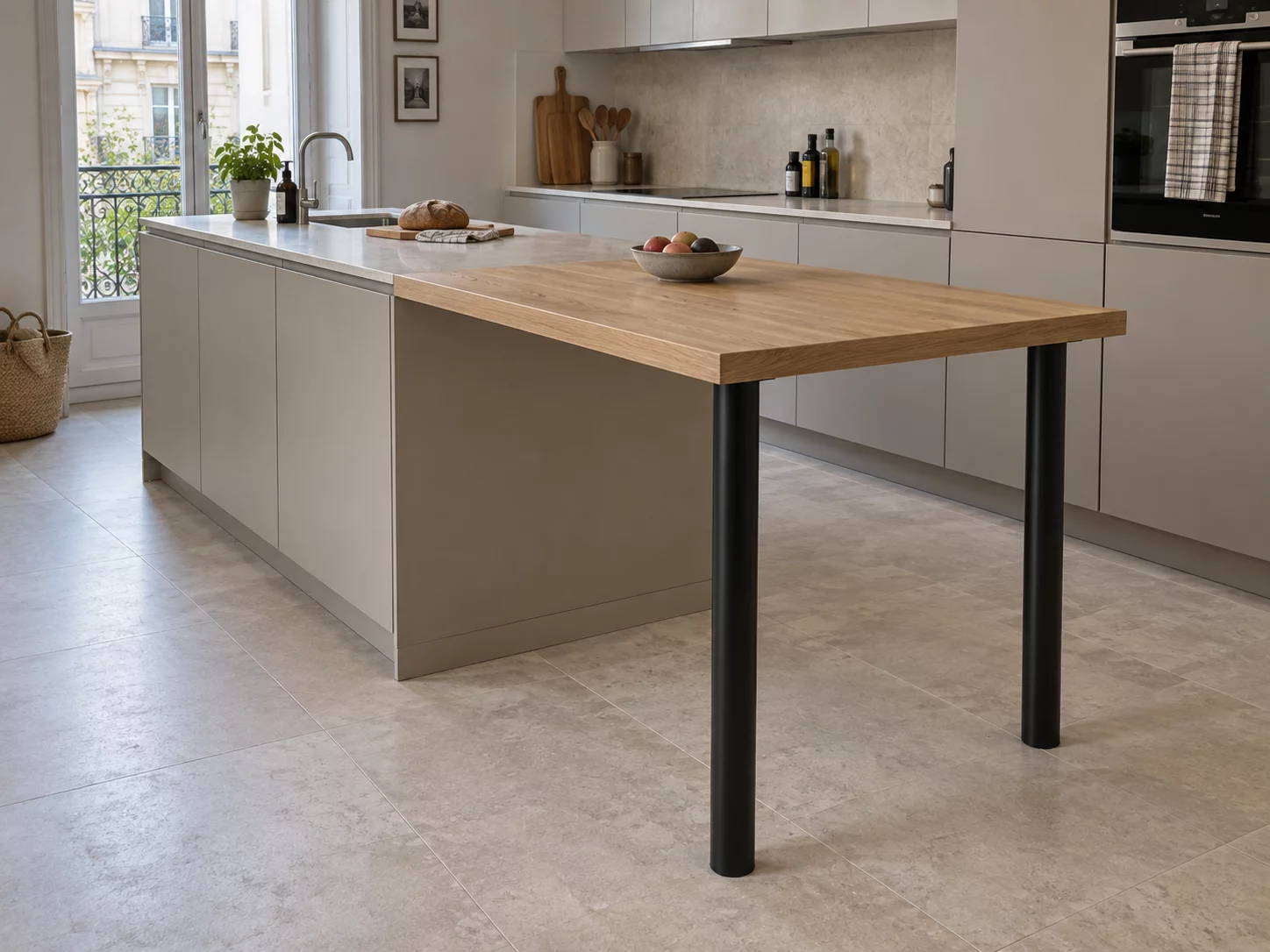
Round: the simplicity of metal tubing
Here, 'round' refers to the leg's cross-section: a round metal tube. It does not refer to a round tabletop or necessarily to a circular base. The tube diameter influences its visual prominence, while the mounting plate and positioning determine how it is fitted.
The round table legs can suit a variety of projects, provided you check the model, fixings and distribution of the supports.
Before choosing: consider the table from every seat
Mark out the tabletop outline and floor contact points, then position the chairs. Check clearance for knees, shoes and armrests, as well as the space needed to sit down and stand up.
Shape defines the style; compatibility also depends on dimensions, the tabletop and fixings. Complete your selection by exploring the by use and by height categories.
Frequently asked questions
Do you need round table legs for a round tabletop?
No. The shape of the tabletop and that of the table base are two separate choices. A central table base or another arrangement may be suitable if the model is appropriate for the diameter, material and anticipated loads.
Which shape provides the most legroom?
There is no single answer that applies to every model. Compare the openings, branches and supports from every seating position, using the chairs you intend to have around the table.
Is a more substantial table leg necessarily stronger?
Its appearance alone is not enough to determine this. The metal section and wall thickness, joints, supports, tabletop and fixings all contribute to how the complete table performs.
Is the tube section the same as the metal thickness?
No. The tube section describes the external dimensions of the tube; its wall thickness is a separate specification. Check the model's technical details rather than trying to determine them from a photograph.
Can I choose the leg shape before choosing the tabletop?
You can start with an aesthetic preference. Before ordering, however, check compatibility with the dimensions, material, weight and fixing method of your future tabletop.