MDO CONCEPT · ATTENTION TO DETAIL
The Right Table Legs for Your Tabletop
To choose your table legs, start by identifying how the tabletop is constructed and its outline. Material, span and fixing areas are just as important as style when planning your project.
Guidance to help you choose ↓
CHOOSING WELL · According to Your Tabletop
Your Tabletop: The Starting Point for Choosing Table Legs
Start with the Material and Construction
A wood-effect finish does not necessarily mean solid wood, and a tabletop with a stone-like appearance may consist of several layers. Identify the actual material, its thickness and what lies underneath: reinforcements, an additional panel, inserts or existing fixings.
This section helps you choose metal table legs suited to your tabletop. The material and outline of the tabletop influence the installation method; they do not determine the shape of the legs.
Solid Wood: Plan the Supports and Fixings
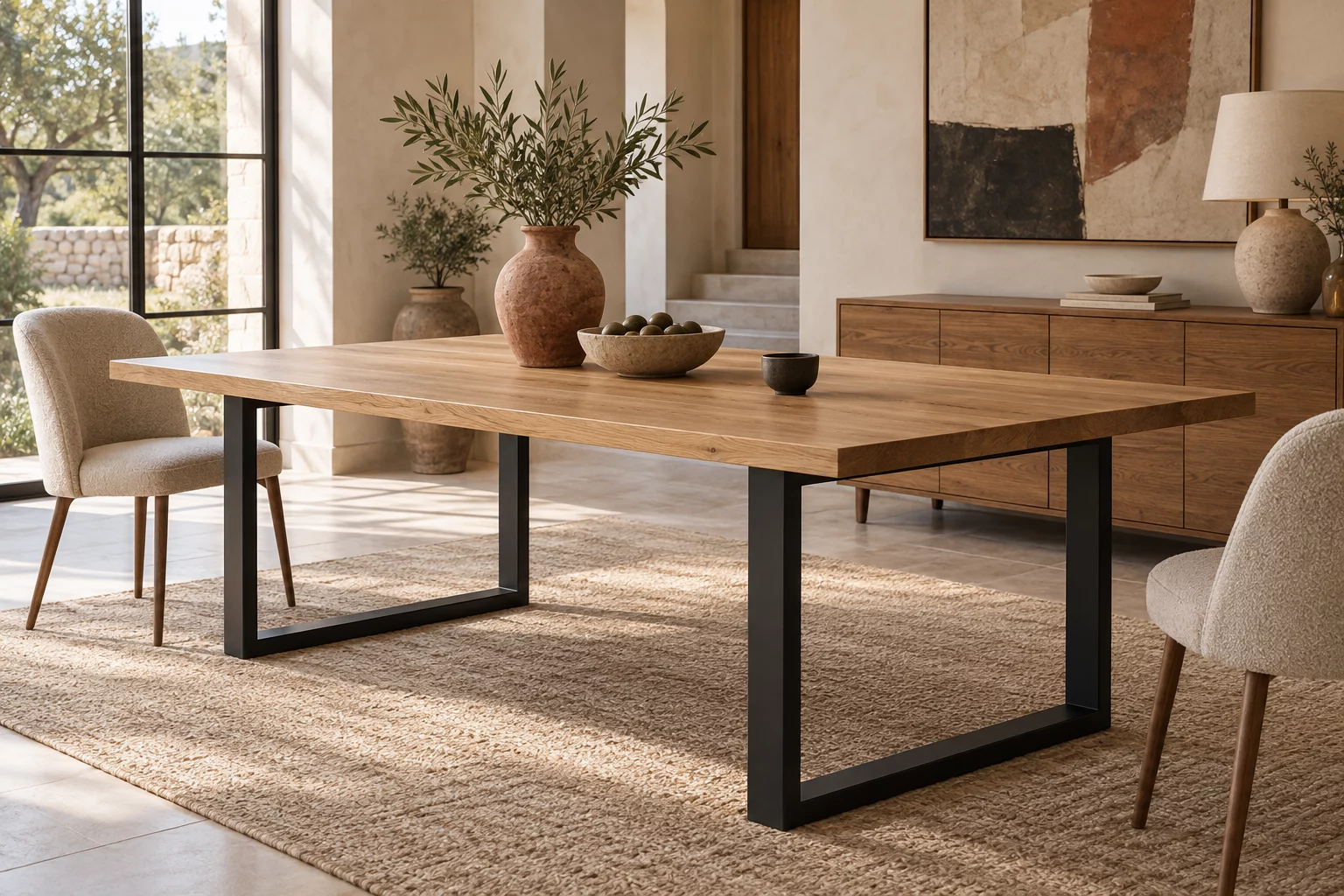
Solid wood can move as humidity levels change. The installation must allow for this movement and follow the tabletop manufacturer's instructions. Check the position of the mounting plates, fixing areas and screw lengths to avoid penetrating the top surface.
Explore our metal table legs for solid wood tabletops. For an MDF or chipboard tabletop, do not automatically use fixings intended for solid wood: the construction of the board also matters.
Round Tabletop: Compare the Diameter and Available Space
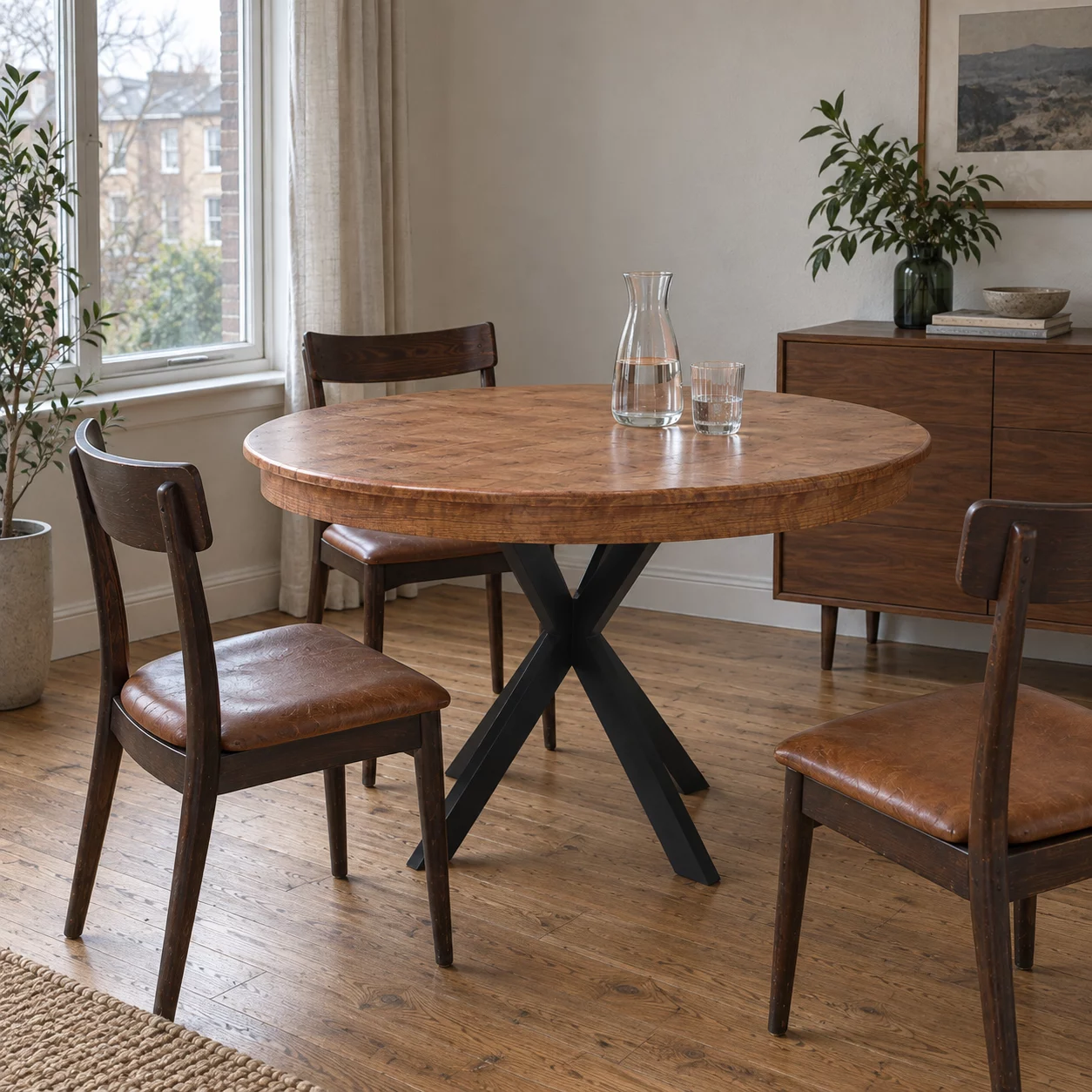
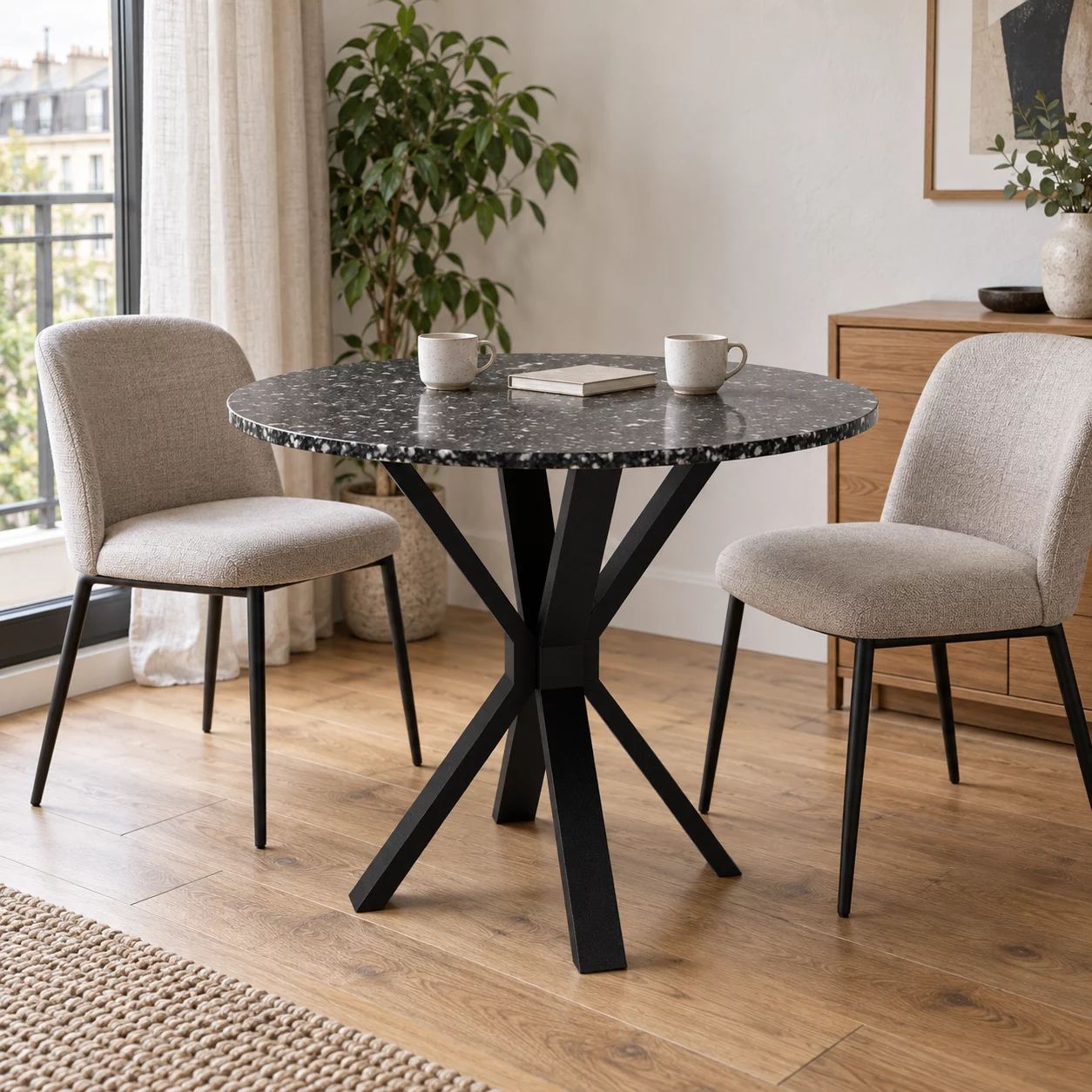
A round tabletop requires the supports to be distributed within its available outline while allowing diners to sit comfortably. Check the space occupied by the table base, the tabletop overhang and the legroom around the table.
The table legs for round tabletops category is not limited to central bases or round tubes. The right solution depends on the tabletop dimensions and the characteristics of the model.
Rectangular or Oval Tabletop: Consider the Usable Length
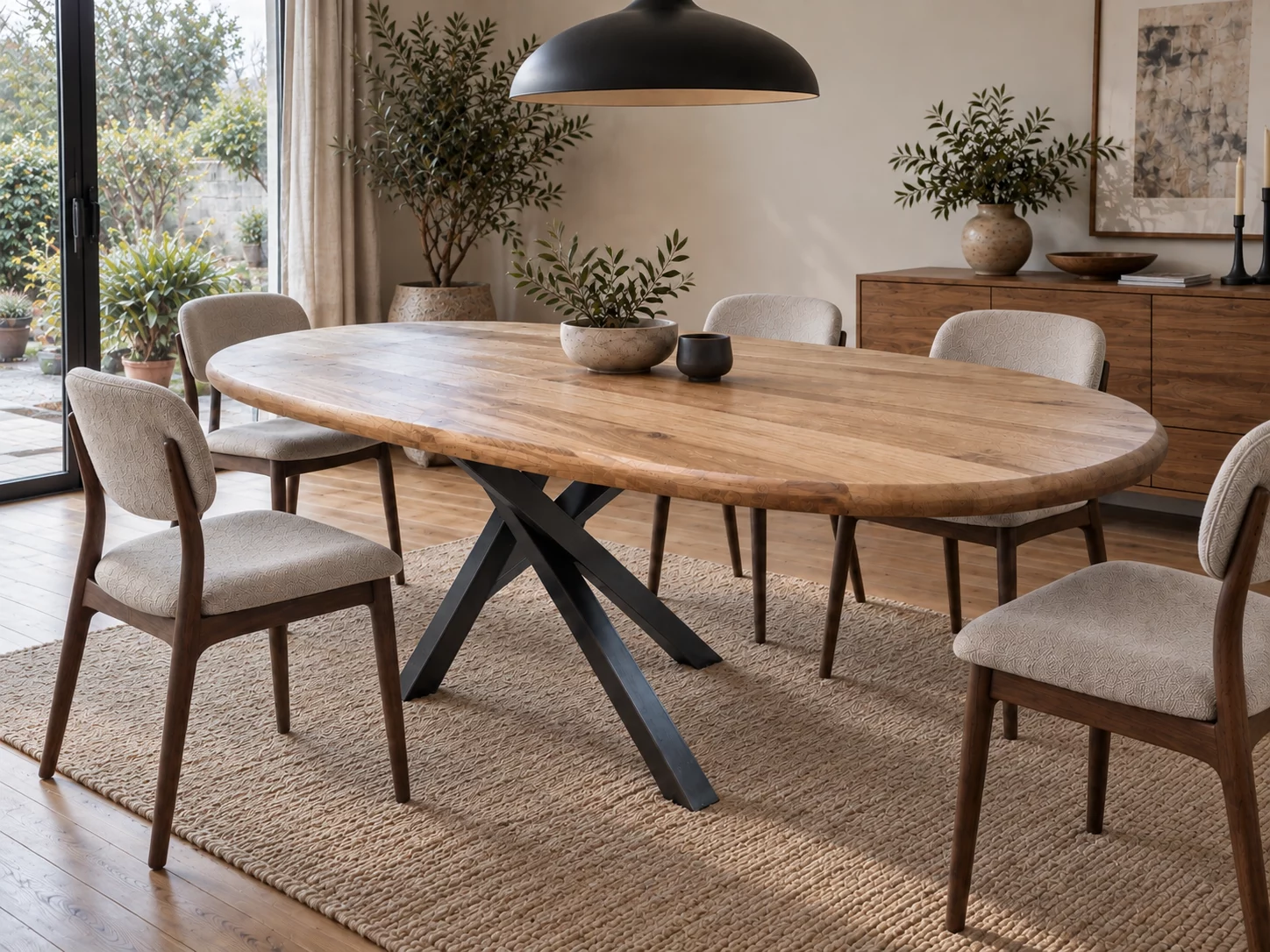
For an elongated tabletop, consider the distance between supports, the overhangs at the ends and the space available for chairs. An oval outline reduces certain available areas beneath the tabletop: the mounting plates must remain entirely within a suitable fixing area.
Explore our table legs for rectangular or oval tabletops. If the table has extension leaves, also check the position of the mechanisms and the installation when the table is extended.
Stone, Marble, Quartz or Ceramic: Check the Support System
These tabletops require particular attention to the supports, spans and distribution of forces. Weight alone is not enough to make a choice: the fragility, thickness and construction of the tabletop also matter. Not all table legs are suitable for these materials.
Depending on the system approved by the supplier, the connection may involve suitable adhesive bonding or a panel bonded beneath the tabletop, to which the legs are then fixed. The panel, adhesive and fixings must be compatible with the complete assembly; this is not an installation to improvise.
Explore our table legs for stone, marble, quartz or ceramic tabletops and ask the tabletop supplier to specify the support points and connection method.
Information to Gather Before Comparing Models
Record the length, width or diameter, thickness and weight of the tabletop, if known. Add a photograph of its underside and identify any reinforcements, mechanisms, existing fixings and available areas.
Then specify the intended use, desired number of seats and finished furniture height. The by use, by height and by shape sections help you refine your choice without overlooking seating comfort.
Frequently asked questions
Should I Choose the Tabletop Before the Legs?
It is preferable to know the tabletop's dimensions and construction before confirming a table leg model. You can explore styles earlier, but the installation must be confirmed for the chosen tabletop.
Can I Keep My Table Legs if I Replace the Tabletop?
Not automatically. A different material, thickness or set of dimensions can change the supports, finished height and fixings. Check the compatibility of the entire new table.
Does a Heavy Tabletop Necessarily Require a Central Table Base?
No. A central design alone does not guarantee compatibility. You must examine the model's characteristics, the distribution of supports and the tabletop manufacturer's instructions.
Can You Screw Directly into Stone or Ceramic?
Do not plan to drill or screw directly into the material without a system expressly specified by the manufacturer. An additional support or suitable connection method may be necessary depending on the tabletop's construction.
What Information Is Needed for an Extendable Tabletop?
Provide the dimensions in both the closed and extended positions, the location of the mechanisms and the support requirements. The table base must be suitable for the intended configurations of use.